
Defence · 9 systems
Our solutions
Casualty evacuation, tactical logistics, ISR and recovery on one tracked platform — alongside autonomous interceptors and protective robots. Below is every system configured for defence operations. Each carries an honest maturity label — open any one to explore its full specifications, applications, and media.
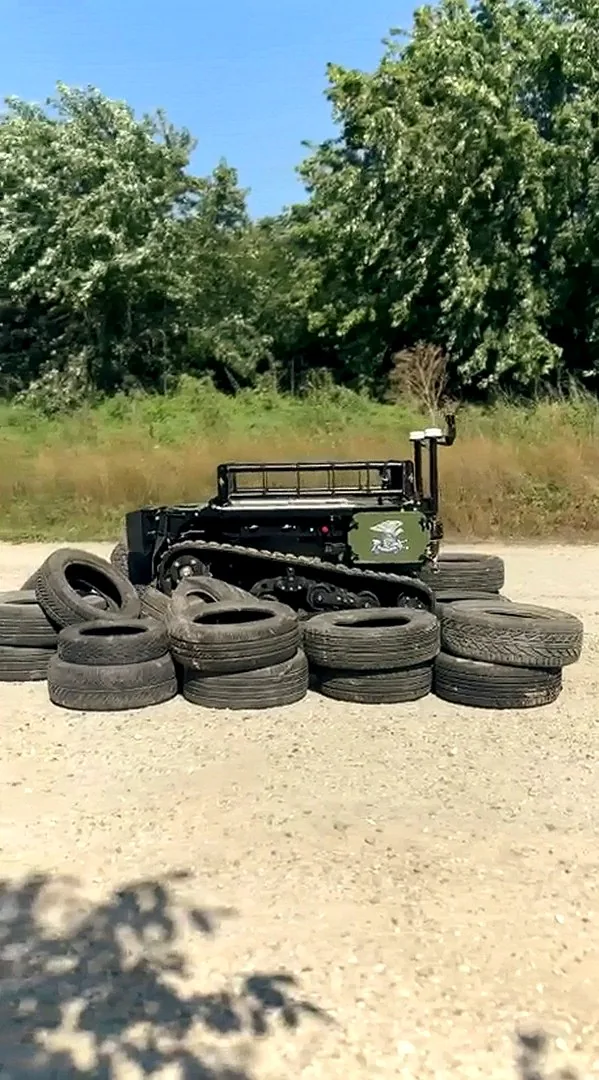
MAX1 · Unmanned ground vehicles
One chassis, many support roles, off the critical path for people.
MAX1 brings a proven intervention platform to the field: a tracked base that carries casualty-evacuation, logistics, ISR and recovery payloads on one standard deck. A remote weapon-station configuration is in testing.
- Casualty evacuation
- The stretcher module lets a small team move a casualty out of a trench or exposed position without adding carriers.
- Logistics and recovery
- A cargo rack carries up to 800 kg across rugged terrain; the pull bar and winch tow vehicles — demonstrated on a military truck — and clear heavy obstacles.
- Surveillance and reconnaissance
- An elevated PTZ mast with day, thermal and night imaging streams live video to the operator's tablet.
- Integration path
- Secure tactical communications, C2 and mission-computer integration, followed by EMC, environmental and cyber qualification.
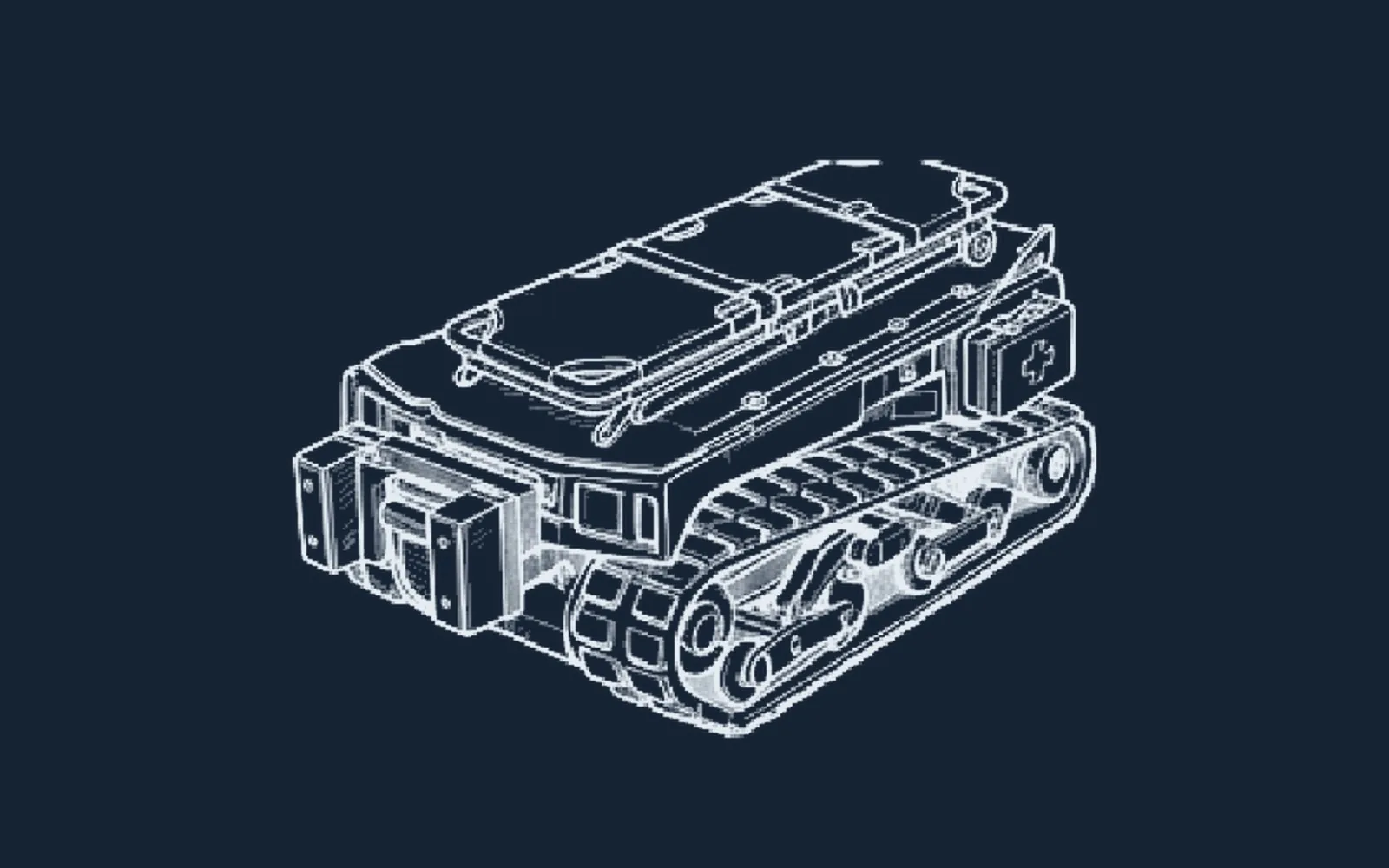
CASEVAC stretcher · Payload modules
A medical-evacuation platform for carrying casualties out of denied, high-temperature or toxic environments.
- Stretcher mounted on the MAX1 payload deck.
- Moves a casualty without adding carriers.
- Demonstrated extracting a casualty from a trench.
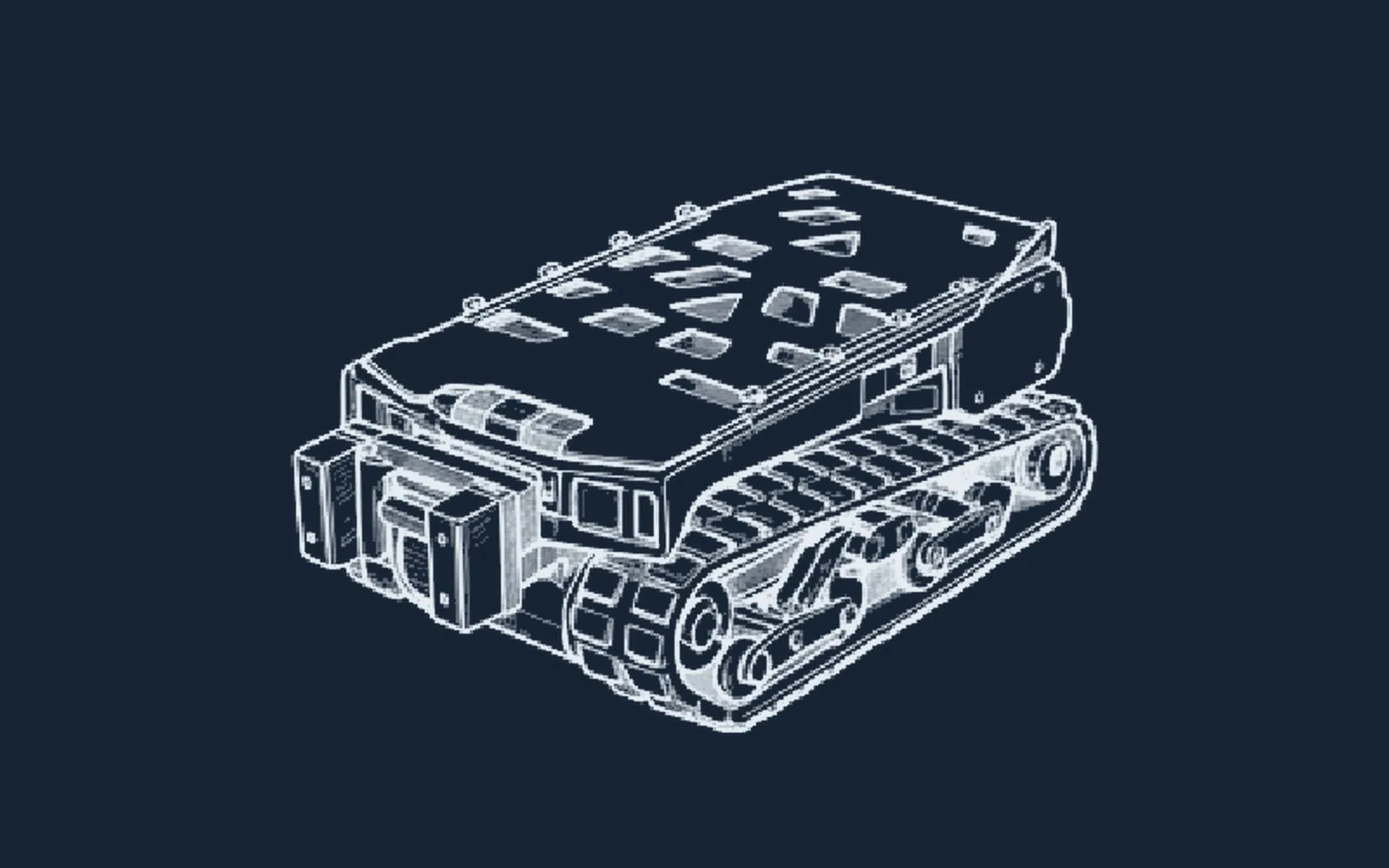
Bare platform · Payload modules
The open flat deck with the full 800 kg payload available for custom sensor or tool integration.
- Full 800 kg payload capacity.
- Standard mechanical mounting and onboard power.
- Starting point for custom mission integration.
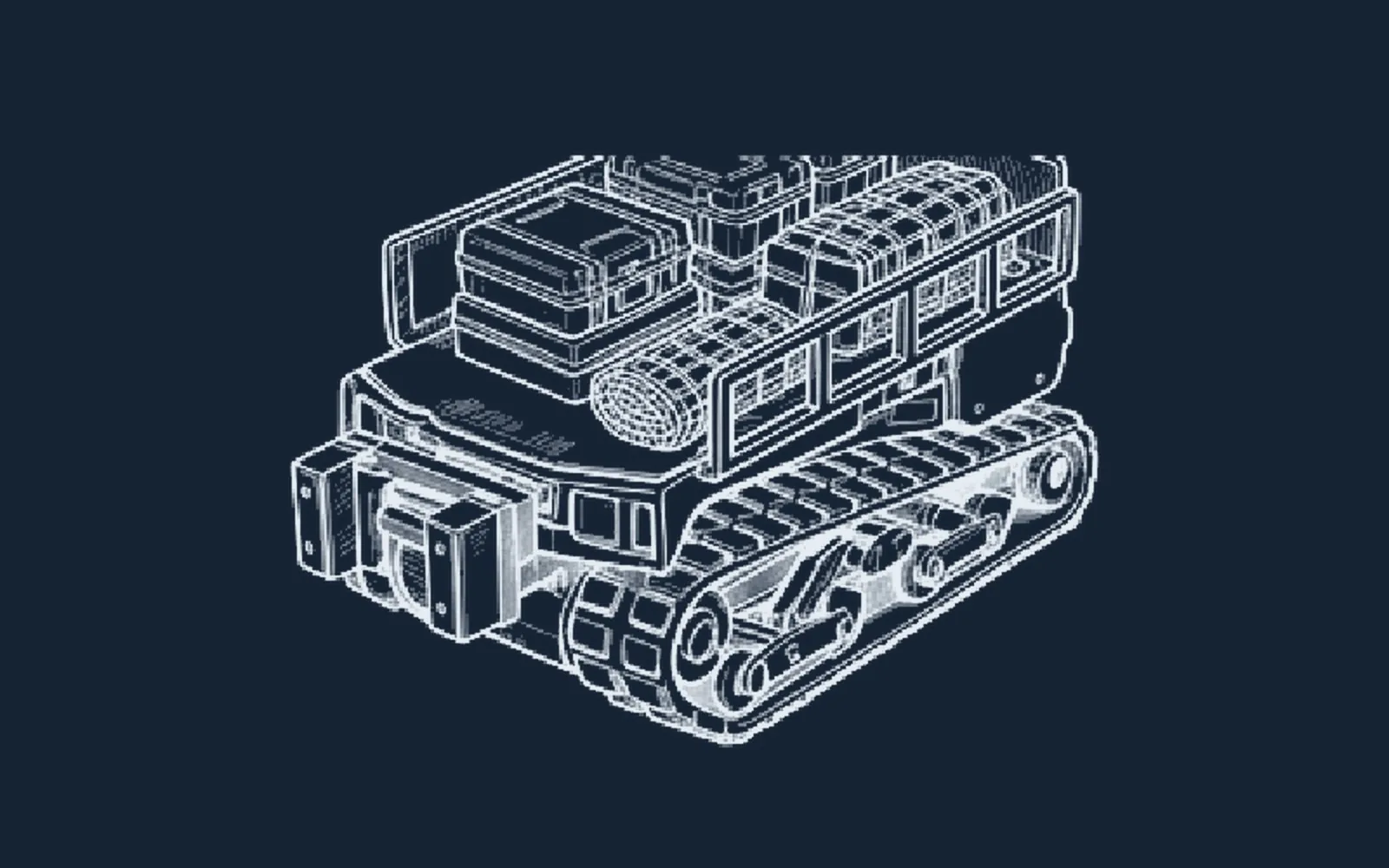
Payload cargo · Payload modules
A multi-tier cargo rack for delivering equipment, medical supplies or breathing apparatus — up to 800 kg.
- Multi-tier rack for mixed loads.
- Up to 800 kg across rugged terrain.
- Keeps people and vehicles off exposed supply routes.
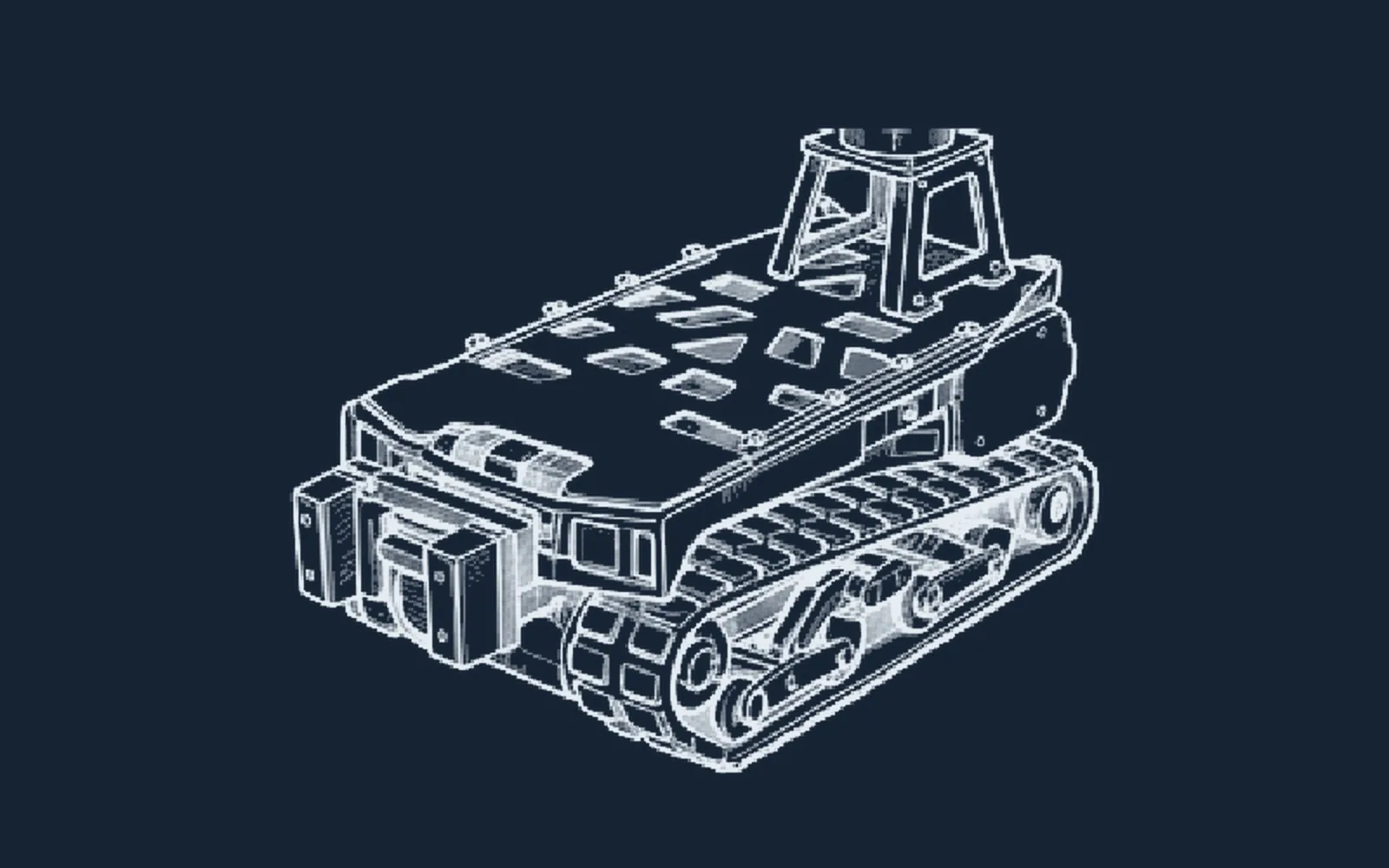
Surveillance module · Payload modules
An elevated PTZ mast with day, thermal and night imaging for reconnaissance and real-time situational awareness.
- Elevated pan-tilt-zoom sensor mast.
- Day, thermal and night imaging.
- Live video and telemetry to the operator.
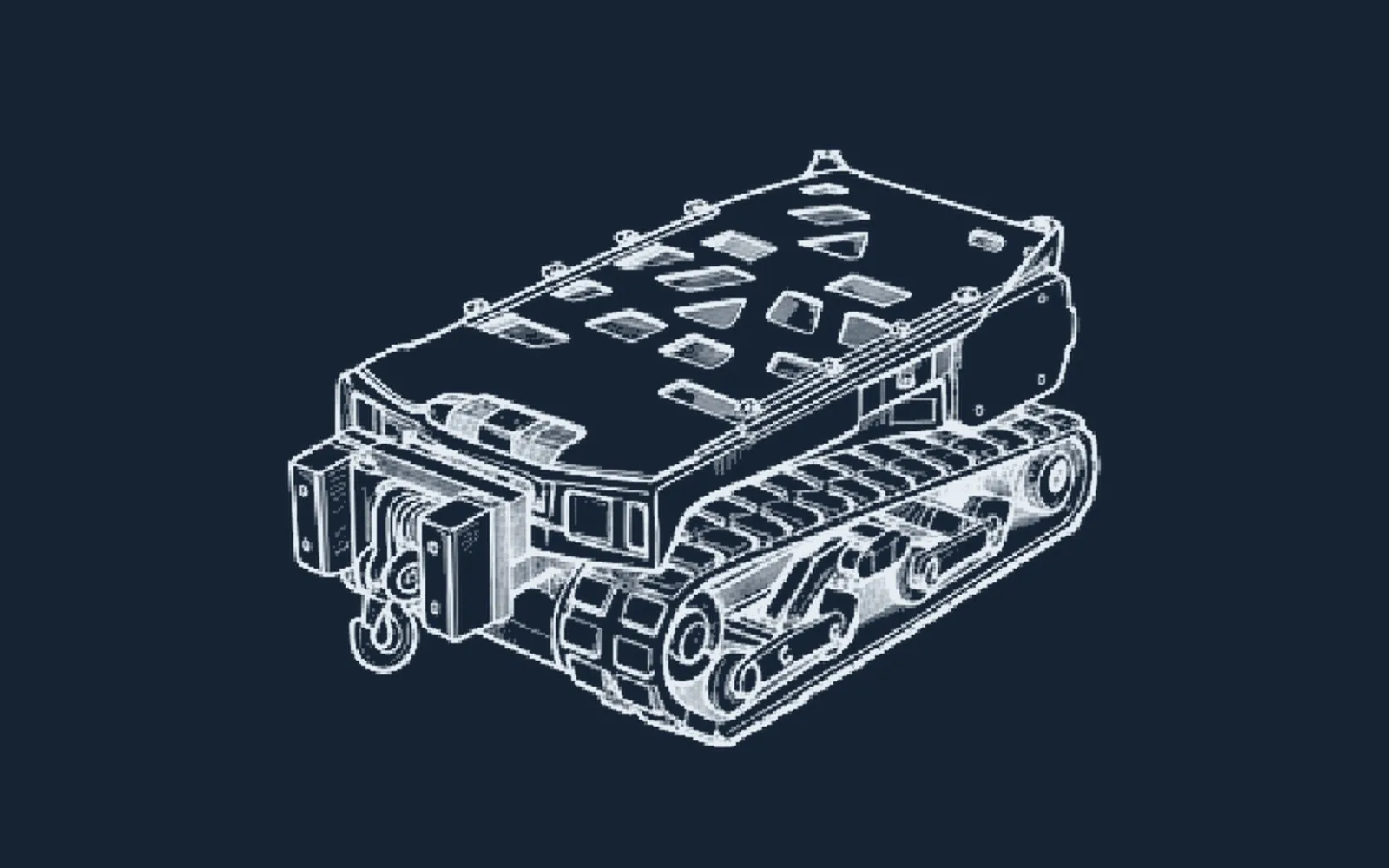
Pull bar & winch · Payload modules
A heavy traction bar and winch for vehicle recovery, door breaching and heavy obstacle removal.
- Heavy traction bar and winch.
- Demonstrated towing a military truck.
- Clears heavy obstacles from access routes.
Autonomous interceptor · Autonomous drones
Built for speed, decided on board.
Our interceptor is in active field testing. The AI running on board handles trajectory optimisation and real-time decisions, and we keep refining hardware and software after every test flight.
- Latest results
- In our most recent field tests the interceptor passed 410 km/h and flew for 18 minutes.
- What's next
- Further tuning of speed, agility and autonomous capability. Performance claims follow verified testing.
Protective robots · Protective robotics
Protecting the operator is the mission.
Our quadruped and humanoid robots run autonomous algorithms that let them react instantly to threats such as grenades or anti-personnel mines.
- Where it stands
- Demonstrated live; the next stage refines data and reaction times.
Spatial Brain · Autonomy & AI
Decisions made on board, not over a link.
Spatial Brain processes flight and mission decisions at the edge, so the platform keeps working when the link to an operator is contested.
- Where it stands
- In flight testing, and being engineered for the most extreme environments.
Not sure which system fits your defence operation?
Tell us the environment and the task. We'll walk you through what is proven today and what is still in development.